Thank you cell phone companies for creating a way to charge me money.
Personal Tech: Take Back the Beep Campaign
Saturday, August 1, 2009

Sunday, July 26, 2009
Skymania News | Space headlines: An Earth bug could survive on Mars
I could live on Mars, could you? This bug can.
Skymania News | Space headlines: An Earth bug could survive on Mars
Skymania News | Space headlines: An Earth bug could survive on Mars
Thursday, July 16, 2009
Soriano
So everyone is talking about Soriano's bat, which is clearly a problem. If he ever finds his swing again, Cubs fans will start forgiving him. But that's not the real issue.
It's is fielding, or lack thereof. I should say it all. It's his lack of hustle. Routinely trotting on infield grounders instead of running, maybe beating some out. And he never ever runs after a ball in the outfield. We're lucky if he jogs. Plenty of singles have turned doubles or triples this year because of his lazy play. Balls that should have been caught by him often turn into singles. And let's not mention how far Theriot has to run constantly in an effort to make-up for the worrying Soriano.
His counterpart that many of you are so worried about is much better in my mind. Sure Bradley likes to blow his top and hasn't hit any better than Soriano. But he runs. He tries. He beats out infield grounders, he dives for fly balls, he makes all (or just about all) the plays he should make. He even makes some he shouldn't.
How can you explain to Soriano that hustle is what is required. Bench him. Who cares what he costs in dollars, it costs more in losing games because he's lazy.
Friday, July 10, 2009
Sun-powered device converts CO2 into fuel - tech - 18 February 2009 - New Scientist
This mildly good idea removes CO2 from the air to put it all back. But I guess it's better than just digging holes.
Sun-powered device converts CO2 into fuel - tech - 18 February 2009 - New Scientist
Sun-powered device converts CO2 into fuel - tech - 18 February 2009 - New Scientist
Monday, July 6, 2009
Thursday, July 2, 2009
Pinella blows top
On another night of quiet bats, Pinella finally lets off the steam.
Maybe it couldn't have come at a more perfect time. Ramirez is about to come back and we're going to take on the Brewers. Last year the tirade led to a strong stretch of winning a lot of games. Could this year be the same?
It needs to be, if we expect to see the post season again this year. The future looks bright, especially considering we've been losing games on bad baseball (many times looking worse than the bad news bears). Also promising is the fact that the Cardinals and the Brewers aren't that far ahead, suggesting they don't have much. In other words, if they were really that good they wouldn't only be 4 or 6 games over 500. The difference is found almost entirely in number of wins.
Go Cubs.
Hossa a Hawk
Havlat lost and Hossa found.
Havlat was great for the Blackhawks this past season, but he does have a history of injuries. Hossa, on the other hand, doesn't miss ice time.
We also stole Kopecky from the Red Wings.
It feels good to improve yourself and steal from your arch enemy at the same time!
It'll be an interesting season with all the changes happening.
Tuesday, June 23, 2009
Should a pregnant woman get priority seating on CTA? - RedEye
The fact that anyone has to talk about this shows the terrible state the country is in.
Should a pregnant woman get priority seating on CTA? - RedEye
Should a pregnant woman get priority seating on CTA? - RedEye
Monday, June 22, 2009
City dwellers leave small carbon footprint :: CHICAGO SUN-TIMES :: Transportation
Just a few more reasons I hate cars, and don't have one.
City dwellers leave small carbon footprint :: CHICAGO SUN-TIMES :: Transportation
City dwellers leave small carbon footprint :: CHICAGO SUN-TIMES :: Transportation
Saturday, June 20, 2009
7901060203voyager58mto3.gif (GIF Image, 390x400 pixels)
This is why we need to go to space.
Beautiful!
7901060203voyager58mto3.gif (GIF Image, 390x400 pixels)
Beautiful!
7901060203voyager58mto3.gif (GIF Image, 390x400 pixels)
Thursday, June 18, 2009
'Stop The Meters' Rally Opposes Lease Deal, New Meters - Parking Ticket Geek
'Stop The Meters' Rally Opposes Lease Deal, New Meters - Parking Ticket Geek
Maybe people should learn that cars are pointless. Unless you want the world to implode. Okay that was ridiculous, but I hate cars.
Maybe people should learn that cars are pointless. Unless you want the world to implode. Okay that was ridiculous, but I hate cars.
Wednesday, June 17, 2009
Chicago Reader Blogs: Clout City
Chicago Reader Blogs: Clout City
When will the city move into the 21st century?
Wait, I thought they said it was a 'green' city. No recycling = NOT green.
When will the city move into the 21st century?
Wait, I thought they said it was a 'green' city. No recycling = NOT green.
Tuesday, June 16, 2009
Another Blow to Epic Chase - Sosa Is Said to Have Tested Positive in 2003 - NYTimes.com
Another Blow to Epic Chase - Sosa Is Said to Have Tested Positive in 2003 - NYTimes.com
This list is going to continue to grow for some time because baseball seems to think it's better to prolong the pain and agony of ruining our pastime, instead of giving us the truth so we can move past the horrible path baseball took to regain its glory.
PS. Where are the asterisks?
This list is going to continue to grow for some time because baseball seems to think it's better to prolong the pain and agony of ruining our pastime, instead of giving us the truth so we can move past the horrible path baseball took to regain its glory.
PS. Where are the asterisks?
Sunday, June 14, 2009
10 Reasons the Oakland Raiders May Be the Most Exciting Team to Watch This Year | Bleacher Report
10 Reasons the Oakland Raiders May Be the Most Exciting Team to Watch This Year | Bleacher Report
All very good reasons I'll be watching now that CBS actually works.
All very good reasons I'll be watching now that CBS actually works.
Friday, May 22, 2009
Remembering the Note
There were a lot of things I could have done after reading the note. But I followed the instructions perfectly. The gully was about three miles from my house directly west on Highway 72, past the old quarry. But I couldn’t be followed so I headed east. I was going to take some strange turns to see who would follow. I liked to think of myself as a
read more | digg story
read more | digg story
Thursday, May 21, 2009
Congressman: White House LGBT Announcements Imminent
California representative Howard Berman predicted in an interview Thursday that the White House would be presenting new information “I think the White House is preparing to make an announcement on a number of issues,” he said, declining to go into detail.
read more | digg story
read more | digg story
NOLA Post Katrina in Photos: Slowly Coming Back to Life.
Today, Mayor Nagin stated that life in New-Orleans was back to normal. Well, the Big Easy still has some way to go even for a partial recovery. This is a visual testimony of the recovery process with the men & women trying to make it happen....
read more | digg story
read more | digg story
Wednesday, May 20, 2009
Image in a 140 character Twitter - It's possible!
Preliminary result of a little competition with the goal to write an image encoder/decoder that allows to send an image in a tweet. The image on the left is what one can currently manage to send in 140 characters via twitter.
read more | digg story
read more | digg story
Boating Stimulated
Great Lakes Boating Federation hails the grants recently awarded by the U.S. Fish and Wildlife Service’s Boating Infrastructure Grant (BIG) program. This is a small step in the right direction, but there is a lot to be done.
read more | digg story
read more | digg story
New high-speed Canadian trains touted to match U.S. vision
A multibillion-dollar Canadian high-speed rail project could inject new life into the domestic steel industry and allow the country to keep pace with a "visionary" plan launched last month by U.S. President Barack Obama, railway industry and public transit advocates said on Tuesday.
"Obviously, President Obama has made it a priority and so we're certainly at risk of losing ground to them if we don't take a good hard look ourselves and make some decisions over the next few years," Cliff Mackay, president and chief executive officer of the Railway Association of Canada, said in an interview.
read more
"Obviously, President Obama has made it a priority and so we're certainly at risk of losing ground to them if we don't take a good hard look ourselves and make some decisions over the next few years," Cliff Mackay, president and chief executive officer of the Railway Association of Canada, said in an interview.
read more
Monday, May 18, 2009
Los Angeles " Lost & Found " in Photographs.
All American cities change at a much faster pace than European cities in the architecture, the advertising and even the people in what seems to be a constant flux of visual novelties and oddities. This is especially the case for the ever morphing Los Angeles......
read more | digg story
read more | digg story
FictionMarket.org ~ Catfish Boys by Jackie Corley from 34thP
“Catfish Boys” by Jackie Corley from 34thParallel is a plain spoken, literary tale set in youthful years. The story is told in first person, with almost no dialogue. The narrator starts off describing the boys of this summer, with their young faces and ways. Next comes a slew of descriptions of the life experienced during those times for this narra
read more | digg story
read more | digg story
Getting Started with Ruby on Rails: Installation
This article will guide you through the process of installing Ruby on Rails, and any other software that is required to begin using it.This is the first of two articles, Part 1 will show you how to install Ruby on Rails (on Windows) and Part 2 will show you how to create a basic blog.
read more | digg story
read more | digg story
Linux GP2X Wiz portable game system available
"That's right mobile gaming fanatics. GamePark's new GP2X Wiz portable game system is now available. The new device sports a 533Mhz 3D accelerator plus flash engine, 1 gigabyte flash memory, SD card support, and will run you about $180"
read more | digg story
read more | digg story
Sunday, May 17, 2009
Woman by the Water
The morning before the hurricane I cheated on my husband for the third time.I suppose it had been a mistake for us to move here. “But, Dosy, sweetheart, I thought you loved the ocean!” my husband Jackson had spluttered. “You always said it was your favorite place growing up.” Actually, I had said that exactly once, on our honeymoon in Barbados
read more | digg story
read more | digg story
Saturday, May 16, 2009
On the Fence
He stood before the house with his arms slung over the white fence, beginning to tingle from pinched nerves and blood vessels. In the upstairs window, a woman in a blue-silk night gown sat before a row of bright lights putting on make-up. Her blonde hair was held back from her face with some invisible band. She reminded him of his ex-wife.
read more | digg story
read more | digg story
Friday, May 15, 2009
City of New Orleans Express
City of New Orleans Express
By Justin Hoffman
Riding on the City of New Orleans
Illinois Central Monday morning rail...
Rolls along past houses, farms, and fields.
Passin’ trains that have no names,
Freight yards full of old black men
And the graveyards of rusted automobiles.
- Steve Goodman
Steve Goodman wrote the song “City of New Orleans” in 1972 about a train route, running from Chicago to New Orleans. It was once operated by Illinois Central and is currently ran by Amtrak. At the time of the switch, all passenger rail companies were being converted into Amtrak by the United States government, due to the poor financial situations of passenger rail companies. This failure by the country to uphold its once expansive system, he (Goodman), saw correctly as its demise. Since its inception, Amtrak has struggled to survive, while passengers are forced to ride in aging cars on rusting tracks. Each of the following chapter is headed by a quote from Goodman’s song.
“Don’t you know my I’m your native son.”
Trains are what glued this country, and it’s people, together long before any other means of travel. Sure, horses came first, but they were much too slow to cover hundreds, of even thousands, of miles in a reasonable amount of time. Since 1869 there has been a transcontinental rail line, running from the West Coast to the East. Railroads were used to build cities and allow people to travel between them. It was the best form of travel for over 100 years, before the highway system began to take shape and before there were passenger airlines.
The system peaked in 1920 and then steadily declined. In 1971, the railroads were combined to form Amtrak with the idea of saving passenger rail, and the entire system was severely shrunk in an effort to save money. Ever since, Amtrak has been struggling to survive. serving 23.5 million passengers a year, operating up to 265 trains per day over some 23,000 miles of track in more than 500 cities and town in all but four states (Alaska, Hawaii, South Dakota, and Wyoming).” (Hansen)
The federal government has only spent “$23.6 billion from 1971 to 2001” on Amtrak, while they have spent “$404.5 billion on highways” and “$166 billion on air travel” in the same amount of time (Hansen 4). There is a clear separation in the amount of money spent on these three types of travel, with roads far ahead of planes and even farther ahead of trains. These figures prove that the government believes no one cares about trains, and no on wants to use them for transportation.
One possible reason for some of the decline in passenger rail travel is the lack of opportunity to use it. There is not enough money to give possible riders many choices for travel times. Rather than finding five or six times during a day, as would with Greyhound o flying, often there is only one departure per day with Amtrak. This forces potential passengers to use their own cars or to fly; even a single airline has many more departure times. But some have not forgotten the pleasure of trains, and you’ll find them inside Union Station in Chicago.
Just west of the Chicago River, in th heart of downtown, between Jackson Boulevard and Adams Street, is Union Station. It is the second Union Station, a terminal where tracks and facilities are used by more than one rail company, built in Chicago and opened in 1925 (“Union Station”). Built during the peak of passenger rail travel in the United States, this station can handle many more people than it serves today. “During World War II, Union Station was at its busiest, handling as many as 300 trains and 100,000 passengers daily,” and “as of 2004, approximately 50,000 people use the station on a daily basis” (“Union Station”). The majority of today’s passengers are Metra rides, or commuters, not Amtrak travelers.
Inside, one will find the people who have not forgotten trains. They are just like me, finding some enjoyment and purpose to the first real passenger travel service. Downstairs is where I will find myself. It is the place where we all wait; I say “we,” because I am waiting too, though not for a train. I am part of the group, no longer outside looking in. I am inside looking out, even looking across. There are many of us, and we have been forgotten, as our trains have been, only they do not know it yet. I observed these people for several months, speaking to some of them, before researching - only to draw the conclusion that these people cannot be forgotten. They are carrying the rest, making many lives easier, all because they ride trains.
To find these people, to meet them, and to see they are the same as you; you must follow me on into the station and on a fast journey to New Orleans on the new City of New Orleans Express. Are you ready to see how impressive train travel could be? Are you ready to join the club that will make it happen?
The Catch
Brad rushed to the edge of the warning track, looked up to the jumbotron, took a step, and lept. The flyball he tracked was decending quickly from the lights of the dome. He timed the leap well, reached with his glove over the fence. The ball landed with a swap into the webbing of his mitt.
read more | digg story
read more | digg story
Thursday, May 14, 2009
City of New Orleans Express pt. 2
"I’ll be gone five hundred miles when the day is done.”
On any given day go with the rush of people into Union Station on Canal Street. Follow them through the folding automatic doors, down the escalator, and into the Amtrak section. Once inside, there is a desk for passengers to acquire helpful information, and there are several choices of direction - from left to right are four doors. Leftmost, is the doorway to gate “A” and “B.” Here one boards northbound trains, such as the Hiawatha (service to Milwaukee). Next is a door to the business class lounge. Then, there are the much needed restrooms. Last, and to the right, is the doorway to gate “C” through “F.” This is boarding for the southbound trains, including the City of New Orleans and its express - which we will board after meeting some of the people.
We go right, into the largest waiting room. It is about 80 feet across and 50 feet deep. There are many rows of comfortable, beige chairs. Several structural support columns stand as if the strongest of trees in a forest of people. The walls are a shade of tan, the carpet is green, and the ceiling is a cream color. The lights are kept low, but not dim, for a relaxing atmosphere - it is about comfort. Once in the room, we find rentable lockers covering the left wall, vending machines watching from the back corner, brochure racks scattering information, and luggage cart waiting to be rented. The gates are openings (doorways with no doors) in the far wall that lead to another, smaller waiting room very similar to this one. Next to each doorway is a window, and on each ledge is a planter with some kind of ivy. Monitors, hanging from the wall above the window holes, display the arrivals and departures of trains. The other waiting space is used for the pre-checked passengers, and as a way to keep trains on schedule. Beyond, are the platforms and tracks, where we and others will board our train.
My favorite place to sit is on the right side, near a wall of curtained glass windows, which look upon a hallway. The hallway leads from the Metra platforms, next to the Amtrak platforms, to the escalators up to Canal Street, where we entered. From here, I can see the entire room, which is why I like it. From outside, sounding distant, there are rumbles of the trains’ diesel engines waiting, wanting to pull the cars, and wishing to never stop. Here and there, crackles come from workers’ radios, and horns warn people to move for luggage carts. Occasionally, there are announcements from the overhead intercom about security or boarding and arriving trains. All these sounds mix with he mass of people talking and laughing. Every once in a while, a burst of baby cries - though never lasting for long - cuts the air.
The waiting room is full of people. There is every kind of person imaginable. I see grandparents, children, rich, poor, business people, the unemployed, vacationers, Amish, and commuters. All of them finding the train useful and practical. The collection of people on the train is as diverse as any major city. But each person I spoke with was pleasant and kind.
One woman is taking her three children to visit their grandmother. She is dressed in a red sweat suit, sitting with a baby in her lap while the other two kids run to and fro. I ask her why she chooses to ride the train.
“I ride because it’s the best choice we have. It’s nice. We don’t have a lot of money, so we can’t have a car... And planes are expensive. The bus is cheap but it’s slower and there’s less room,” she answers.
People are nearby are a little annoyed at her lack of control over her children. She feels this and begins to yell at the kids, which does not please the crowd of observers any more. She seems like a caring mother with more than she can handle, but with her heart in the right place.
Two rows away is an elderly man standing, his arms waving and flailing. He has a large grin on his face, as the lights twinkle reflections off his balding head. His pants are brown and his sweater is deep, soft blue. He is entertaining several other elderly people with jokes and stories. Everyone has a story to share on a journey by train.
I feel comfortable here. Don’t you? Maybe it’s because I’ve been on train journeys before. When I was fifteen, my parents took me on a vacation by train. We traveled from Wisconsin to Portland, Oregon on the train. Last year, I took an extensive trip with my girlfriend to the East Coast. We left Chicago for Washington, D.C., then went to Boston, and on to New York City. Lastly, we went to Toronto before returning to Chicago. This trip was much more affordable by train than it would have been by plane. It was also much easier than driving all those miles in a cramped vehicle. I found both vacation enjoyable, partly because of the train ride.
One of the things that adds to the value of a trip, is the freedom. As a passenger you have plenty of space to move about. There is a dining car for full meals and a snack car for light foods. Here you can also find space to hang out and play board or card games. There is another car called the observation car, where you can watch movies or the scenery as it passes by. The people are friendly and, as I’ve said, enjoy sharing stories. Sure, the trip takes longer than by plane, but you get to see and experience so much more.
That’s only advantage planes have - they are faster. So, you might ask, “Why save trains? They are so slow, five hundred miles a day is not very fast.” Fortunately, this is no longer the case as trains are faster now (at least in other parts of the world). The slow ones average 50 miles-per-hour. The train, City of New Orleans for example, now covers its 900-mile trek in less than 20 hours. That is a long drive by car, and few of your would get there any sooner than the train, unless you speed and never stop. But all of Amtrak’s trains, except the Acela Express, are extremely slow compared to the capability of trains today. Even the Acela is far from being a speed daemon, reaching a top speed of 150 miles-per-hour and cruising at 125 miles-per-hour. This is quite impressive considering it is riding on a “100-year-old infrastructure” (Tindall 29). But it is far from the fastest trains in the world.
China, South Korea, Italy, Spain, Russia, and more will all have trains rushing at speeds of 180 miles-per-hour. France and Germany have begun work to build a 210-miles-per-hour system linking their countries. These trains have comforts airplanes do not even come close to: wi-fi [wireless Internet], power outlets for each seat, and cell phone repeaters [for better signals], just to name a few. (Tagliabue)
If you join our group, this is, if you decide you enjoy trains too, hop on with us and enjoy the ride. If you are still undecided, come so that you can see how wonderful it is. This is a route of the future; a place where fast trains have become a reality. This is the future where the people have been heard, and the government has supported trains. I will show you around the comforts.
Wednesday, May 13, 2009
City of New Orleans Express pt. 3
"I’m the train they call the City of New Orleans.”
We walk through the gate, out onto the platform. We do not check our bags; we are not searched. There is plenty of room for all your things; only check what you want to. The platform is inside a tunnel under the towers and streets of downtown Chicago. Overhead, power cables hang from the concrete ceiling over the train, which is sleek and fresh though it looks similar to the older models. The seats are spacious and comfortable, twice the size of airline seats. You can use your cell phone, plug in your laptop, and connect to the Internet without worrying about takeoffs or landings. The train is filling and preparing to make its daily round trip journey. This is the newly created non-stop trip from Chicago to New Orleans, which Amtrak has named the City of New Orleans Express.
The train begins to pull from the station, gathering speed. Before it leaves the city limits it is traveling at 180 miles-per-hour. Everything outside the window is a blur - houses, cars, tress, all blend into one streak of colors. It is hard to watch anything near, so you focus on the distant images. Hills and forests and fields float far away, near the unchanging clouds. A rhythm from beneath the wheels can still be felt, as in the former train models, but the timing is much faster. The click-clack is gone; now there is a just a solid thump, similar to a car’s tires traveling on an uneven concrete freeway.
The diversity of the place shows itself on the train also. Walking by is a large, middle-aged man wearing a leather vest, without a shirt underneath. Tattoos are displayed up and down his bare arms. His hair is long and grey, pulled back into a ponytail. We get up to see what movie is playing and to get something to eat from the snack car. Here, we meet a young man with a guitar. He does not carry it in a case, which I had to ask about. He replied, “This is the one my father bought. My baby is at home, safe.” He is visiting his parent. His father sent him to an expensive school but he does not wish to attend, so he spends his time playing guitar. These are also the people of the train; do not forget them.
The 900 miles between the two cities can be covered in just five hours with no stops. All the way from Chicago to New Orleans, in just twice the time that it would take to flying in a plane (if you do not count the security checks and travel between the airport and downtown).
The price tag would have to be enormous to build such a system. “It took $3.8 billion to electrify and modernize much of the Northeast [Washington, D.C. to Boston, MA] corridor’s infrastructure. [Not including] an $850 million loan for [the] Acela trains” (Tindall 30). That work was so trains could go 125 miles-per-hour over roughly 440 miles. So, the tag would be far greater to upgrade over 900 miles of track to 180 miles-per-hour train travel. “In South Korea, Alstrom... is supplying 185-miles-per-hour trains for a five-year, $17 billion project that has connected Pusan and Seoul” (Tagliabue 2). Those cities are only 204 miles apart. Thus, once can only speculate how much it would cost to build or upgrade the present system for speeds of this kind from the Midwest to the Delta.
But this wonderful dream is unlikely to come true. So far the United States Government has spent very little on Amtrak throughout its history. There is no indication this trend will change. Amtrak is clearly underfunded, as they are having trouble keeping the system up to date.
“Good Night America how are you?”
Trains pollute almost six times less than planes, and over three times less than automobiles per person (Tindall 33). They also take up far less space than highways. “A single railroad track can carry as many people as a 10-lane highway” (Hansen 18). “A recent California Department of Transportation study found that a statewide HSR [high-speed rail] network would have saved 7.3 million gallons of gasoline - the equivalent of taking 7,000 sport-utility vehicles or 12,000 cars of the road for a year” (Hansen 9).
The evidence is clear. Trains are a very beneficial mode of transportation. With an equal share of help from the US Government, Amtrak could be running high-speed trains on a futuristic rail system. I have shown there are many people who do want to use trains, and there are many of those who would surely enjoy a faster trip. Those people are like you and me; we are those people.
Trains will help reduce pollution and improve travel times for those who do need to use the roadways. It is our duty to return trains to their former glory. It can be done. Instead of jumping in your car, or catching a plane, next time you wish to take a trip, consider Amtrak. You may find it to be cheaper, and you will surely find it more enjoyable. All those already here will surely welcome you.
And the steel rails still ain’t heard the news.
The conductor sings his song again,
The passengers will please refrain
This train’s got the disappearing railroad blues.
- Steve Goodman
Works Cited
Goodman, Steve. “City of New Orleans.” Steve Goodman. Buddah, 1972.
Hansen, Brian. “Future of Amtrak.” The CQ Researcher 18 Oct. 2002.
Tagliabue, John. “Overseas, the Trains and the Market for Them Accelerate.” The New York Times 30 Dec. 2005. C1.
Tindall, Blair. “Trains, Planes, and Pains: What’s the Best Way to Get from Point A to Point B? Amtrak’s High-Speed Rail Takes on the Airlines.” Sierra Nov.-Dec. 2003. 28-33.
“Union Station (Chicago).” 16 Feb. 2006. 14 Apr. 2006
en.wikipedia.org/wiki/Union_Station_(Chicago)
Sunday, May 3, 2009
The Hardest Part by Carol Vlassoff
I strip off my clothes, damp from the four hour ride from San José, and plunge into the cool water. True to its name - an infinity pool - the turquoise water seems to flow seamlessly into the sky and sea beyond. The long coastline stretches out before me, the waves a brilliant white against the deep blue of the sea and the lavender hills behind. B
read more | digg story
read more | digg story
Thursday, April 23, 2009
Prepare to Believe by Dane Cervine
“Prepare to Believe” by Dane Cervine from Contrary is a plain spoken, realistic story set in the Cincinnati area. Told in the first person, this story treks through the chronology of the narrator’s history with religion. He remembers this detailed past because his wife forces him to visit the Creation Museum. The family is late to the museum, due t
read more | digg story
read more | digg story
Thursday, April 9, 2009
AREN’T FISH PEOPLE TOO?
Another dam is being removed, this time in Covington, New York. The thought is that native fish will once again use the river for spawning, thereby restoring populations to the glory years when there were so many fish that they fought each other to swim upstream. It takes no amount of science or thought to realize that removing an impediment unnatu
read more | digg story
read more | digg story
Monday, March 23, 2009
First rule of ant traffic: no overtaking
Ever seen an ant traffic jam? Researchers studying ant traffic are beginning to understand why.
read more | digg story
read more | digg story
Sunday, March 22, 2009
Dreamcatchers by Bart Scagnelli
It is late, probably two or three. Linda catches me awake, staring at the ceiling fan as it traces endless circles in the dark. This happens often. When she first moved in I told her it was the noise of the cars outside our apartment that kept me from sleeping. We live above the Chippewa Bar in Crivits.
read more | digg story
read more | digg story
World's largest model train railway.
Very impressive detail in this model train diorama. Way better than my childhood toy set!
read more | digg story
read more | digg story
Wednesday, March 18, 2009
WTF!? Bonuses Expected at Fannie, Freddie
Fannie Mae is due to pay retention bonuses of as much $470,000 to $611,000 this year to some executives despite enormous losses at the government-backed mortgage company. Fannie's main rival, Freddie Mac, also plans to pay such bonuses but hasn't yet provided details.
read more | digg story
read more | digg story
Merle Haggard Never Sounded As Lonely As Mermaids In The Riv
“Merle Haggard Never Sounded As Lonely As Mermaids In The River” by Trey Moore from SFWP.org is a plain spoken, fantastical story set in a world resembling our own. The story is told in third person with a good mix of dialogue and description. The basic form is that of a fairy tale, but it lacks a moral. Lefty fathers two children, a girl and a boy
read more | digg story
read more | digg story
Tuesday, March 17, 2009
New bill would tax AIG bonuses at 100 percent
The $165 million in bonuses set to go to American International Group executives would be taxed at 100 percent under a new bill introduced Tuesday in the House. President Barack Obama is moving to block the AIG bonuses, but it's unclear whether he can get the payments back from the company, which is awaiting a $30-million installment in fed bailout
read more | digg story
read more | digg story
''Family Guy'' wins court battle over song
NEW YORK (Reuters) - Creators of the U.S. television show ''Family Guy'' did not infringe copyright when they transformed the song ''When You Wish Upon a Star'' for comical use in an episode, a U.S. judge ruled on Monday. Music Publisher Bourne Co., the...
read more | digg story
read more | digg story
Sunday, March 15, 2009
Political Punch: 'Amtrak Joe' is Tired of Defending Amtrak,
Vice President Biden, perhaps the nation’s most famous Amtrak passenger, announced today that Amtrak will receive $1.3 billion in stimulus money to expand passenger rail capacity.
read more | digg story
read more | digg story
Saturday, March 14, 2009
SXSW 2009 on BitTorrent: 6 GB of Free Music
The South by Southwest (SXSW) music festival is one of the largest and most popular in the United States. For the fifth year in a row, SXSW has released a DRM-free, RIAA-safe collection of songs totaling 6 GB, which can all be downloaded for free, thanks to BitTorrent.
read more | digg story
read more | digg story
Sunday, March 8, 2009
Broken English by Nina Ki
ACT ONEScene 1Brackets indicate lines being spoken in Korean.AT RISE: KYLE, twenty-two years old, stands across the stage from his MOTHER, fifty-three.KYLEHey. I’m Kyle.His mother shakes her head.MOTHERTae-hu.KYLE(to Mother)Kyle, Mom. You know I don’t like being called that.
read more | digg story
read more | digg story
Monday, March 2, 2009
The Pirate Bay Trial Day 10: Calls for Jail Time
As we enter the final days of The Pirate Bay trial, today the prosecution has been giving the court its closing arguments. Håkan Roswall, Peter Danowsky, Henrik Pontén and Monique Wadsted all appeared, with Roswall calling on the judge to jail all four of the defendants.
read more | digg story
read more | digg story
Today is the Hybrid's 100th Birthday:We Still have Gas Only?
Today we celebrate a unique anniversary. One hundred years ago today, US Patent No. 288,181 was granted to Henri Pieper for a "Mixed Drive for Autovehicles. Yes, on March 2, 1909, the US Patent Office--in its infinite wisdom--granted bragging rights for the guts of a Toyota Prius to a Belgian gunsmith and inventor born in Germany.
read more | digg story
read more | digg story
Friday, February 27, 2009
San Francisco Mayor Asks Feds to Approve Wave Energy Project
This morning, San Francisco took the first step toward turning the promise of renewable ocean energy into reality by submitting a preliminary permit application to the federal government to develop a wave power project off the coast of California. The project could generate between 10 to 30 megawatts of energy, with potential of up to 100 megawatts
read more | digg story
read more | digg story
Eastwood thinks political correctness in society no humour
"People have lost their sense of humor. In former times we constantly made jokes about different races. You can only tell them today with one hand over your mouth or you will be insulted as a racist," the Daily Express quoted him as saying.
read more | digg story
read more | digg story
Wednesday, February 25, 2009
An Artist by Cory Stevens
“An Artist” by Cory Stevens from Yellow Mama is a fantastically tale set in a forest. It is told in third person with almost no dialogue. A young artist lives in a forest with only a never-inkless pen and never-drying cyan paintbrush. After many years he found a completely white room, filled with unending art supplies of all kinds. His urge to wand
read more | digg story
read more | digg story
Sunday, February 22, 2009
Jail Bird by Julia Camara
Annabeth Clink was known for her unusual money making ideas and schemes. She wasn’t dishonest, just desperate for more free time. You see, she’s what one would call a frustrated writer. Never could find the time to finish that novel. Between the many day jobs she could never keep for long and the mess she made of her love life, time was against her
read more | digg story
read more | digg story
Yikes. Court orders Google to remove some sites from results
Courts apparently have the power to censor the internet now? WTF? Create uproar please.
read more | digg story
read more | digg story
McDonalds be a hero on your own time!
Man rescues woman at McDondalds while on duty, man gets shot, McDonalds says pay your own medical bills!
read more | digg story
read more | digg story
Scientists and God
Sir — The question of religious belief among US scientists has been debated since early in the century. Our latest survey finds that, among the top natural scientists, disbelief is greater than ever — almost total.
read more | digg story
read more | digg story
Ron Paul: America's War on Drugs must end
Congressman Ron Paul is the most conservative, grandfatherly man to ever be admired by America's marijuana enthusiasts. On Friday night's episode of HBO's Real Time with Bill Maher, he reminded those who may have been suffering an impaired short-term memory at that late hour why, exactly, they should like him. -=W /VIDEO=-
read more | digg story
read more | digg story
Saturday, February 21, 2009
California cutting off water to people
Water leaders today urged Californians to make every effort to cut water consumption by 20 percent this year because of the growing likelihood of a third straight drought year.
read more | digg story
read more | digg story
Facebook Won't Let You Remove Dead Relative's Page
Facebook thinks it knows better than the sister of the deceased journalist Bill Bemister about what to do with his Facebook page. Stephanie Bemister sent them a copy of his death certificate and asked it get taken down for privacy and respect purposes. Unlike every other single social networking site she dealt with, Facebook said no.
read more | digg story
read more | digg story
Friday, February 20, 2009
Huge gamma-ray blast spotted 12.2 bln light-years from earth
The Fermi telescope has detected a massive explosion in space which scientists say is the biggest gamma-ray burst ever detected, a report published on Thursday said. The spectacular blast, which occurred in September in the Carina constellation, produced energies ranging from 3,000 to more than five billion times that of visible light.
read more | digg story
read more | digg story
NYU Students Barricaded Up To Protest Budget
Dozens of students have barricaded themselves inside NYU's student union cafeteria, demanding increased transparency of the school's finances.
read more | digg story
read more | digg story
Google Earth Uncovers the Lost Forest of Mount Mabu
Scientists from the Royal Botanic Gardens, Kew (RBG Kew) in search of biological riches made incredibly good use of Google Earth imagery when they used it to find a pristine rainforest on top of little-known Mount Mabu in northern Mozambique in 2005. They put a big ‘X’ on their map and journeyed out to Africa in 2008...
read more | digg story
read more | digg story
Wednesday, February 18, 2009
BREAKING: San Francisco Installs Three EV Charging Stations
At approximately 10:00 AM PST today, San Francisco Mayor Gavin Newsom will announce the installation of three electric vehicle charging stations in front of City Hall. The stations will be used by plug-in electric vehicles already in San Francisco’s municipal fleet, along with plug-in electric hybrids owned by City CarShare and Zipcar.
read more | digg story
read more | digg story
Tuesday, February 17, 2009
50% of Charges Against Pirate Bay Dropped
There has been high drama on the second day of the Pirate Bay trial. Due to serious shortcomings in the prosecution evidence, around 50% of the charges in the case are going to have to be withdrawn. The defense describes it as a ’sensation’, seeing half of the charges being dropped on the second day.
read more | digg story
read more | digg story
Monday, February 16, 2009
Magenta is NOT a REAL color!!!
A beam of white light is made up of all the colours in the spectrum. The range extends from red through to violet, with orange, yellow, green and blue in between. But there is one colour that is notable by its absence - Magenta.
read more | digg story
read more | digg story
Scientists stop the aging process
Scientists have stopped the aging process in an entire organ for the first time, a study released today says.
read more | digg story
read more | digg story
Saturday, February 14, 2009
Configuring GIMP 2.6 to Replace Adobe Photoshop
If you’re used to the Photoshop interface, the open source alternative GIMP can be somewhat confusing. You can, however, configure it to look and behave the same way.
read more | digg story
read more | digg story
Aren't you a little short for a stormtrooper?
A young (dwarf?) stormtrooper walks with his mom, who happens to be Princess Leia. What an incredible turn of events.
read more | digg story
read more | digg story
Where you've been on Net not private, judge rules
An Ontario Superior Court ruling could open the door to police routinely using Internet Protocol addresses to find out the names of people online, without any need for a search warrant.
read more | digg story
read more | digg story
Friday, February 13, 2009
Fiction Market Blog: Dandelions by Roger Poppen
“Dandelions” by Roger Poppen from Gowanus is a plain spoken story set in Watertown, South Dakota. The story is told in first person and takes the reader through his parents’ former neighborhood. The trip into the past with his parents sets this narrator into his own past, where he remembers just how neat these people lived. So neat, that they found
read more | digg story
read more | digg story
Graph: Taking Apart The $819 billion Stimulus Package
The centerpiece of President Obama's domestic agenda is an $819 billion economic stimulus plan. Senators spar over what to consider a tax cut. The Congressional Budget Office tallies the tax-cut portion to be significantly less than the one-third Democrats claim it to be.
read more | digg story
read more | digg story
Russian, U.S. satellites collide in space
Two satellites, one Russian and one American, have collided some 800 kilometers (500 miles) above Siberia, the Russian federal space agency, Roscosmos, said Thursday.
read more | digg story
read more | digg story
Evolution of renewable energy
Archaeological evidence shows that the first human use of geothermal resources in North America occurred more than 10,000 years ago with the settlement of Paleo-Indians at hot springs. The springs served as a source of warmth and cleansing, their minerals as a source of healing.
read more | digg story
read more | digg story
Thursday, February 12, 2009
The Pirate Bay: 'Political trial of the decade'
Next week sees the start of the long-awaited Pirate Bay trial. With the eyes of the world on Sweden, Pirate Party leader Rick Falkvinge argues that there is much more at stake than the future of the site's operators.
read more | digg story
read more | digg story
Teenage handbag thief outpaced by 72-year-old ex-sprinter
A teenage thief picked on the wrong victim when she tried to run off with a bag belonging to pensioner Jean Hirst - a former championship sprinter.
read more | digg story
read more | digg story
18 YearOld Having Sex with 14 Year Old Girl gets 10 days in
Jessica's Law is the informal name given to a 2005 Florida law, as well as laws in several other states, designed to punish sex offenders and reduce their ability to re-offend. A version of Jessica's Law has been introduced on the federal level, known as the Jessica Lunsford Act.
read more | digg story
read more | digg story
Generational Theft? Take a look at the last 8 yrs...
The conservative blogosphere, led by up and coming right wing-nut Michelle Malkin have been frantically pushing to label the stimulus bill the “Generational Theft Bill,” and impressionable republicans on the hill are echoing this ill-conceived branding quip. Generational Theft? Talk about the pot calling the kettle black!
read more | digg story
read more | digg story
Wednesday, February 11, 2009
Secret $65M Facebook Settlement "Accidentally" Revealed
ConnectU's attorneys have some explaining to do, after publishing the value of the top-secret Facebook settlement in their firm newsletter.
read more | digg story
read more | digg story
Religion: What Iran and Alabama have in common
Generally, the richest nations tend to be the least religious. However, Americans are extremely religious compared to other other rich-world nations. In fact in certain regions, our level of religiosity rivals countries like Iran and Lebanon.
read more | digg story
read more | digg story
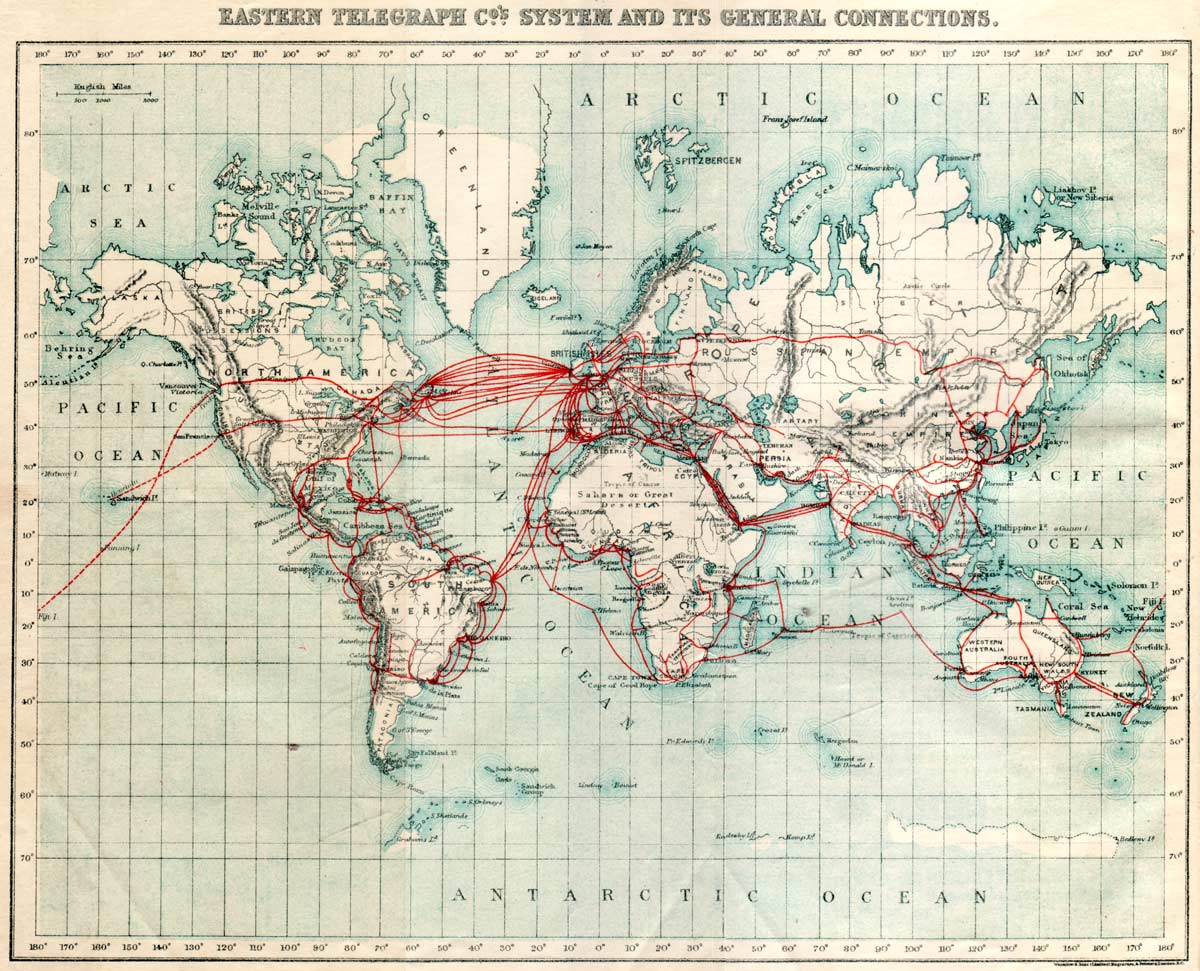
A Map of Undersea Cables from ... 1901!
Not bad for an era that was just getting used to the idea of a horseless carriage
read more | digg story
read more | digg story
Swing by Joshua Scribner
“Swing” by Joshua Scribner from Static Movement is a plain spoken, experimental story set in a mental hospital room. The story is told in third person, consisting mostly of dialogue. The descriptions are sparse just like a stereotypical mental ward is expected to be, adding to the effect of the starkness. Doctor Carol has come into the room of Lucy
read more | digg story
read more | digg story
Sunday, February 8, 2009
Gestation by Adam Bloom
I lie to get her in the car.I tell her it’s a surprise vacation. That I already cleared things with her boss for her to take a week off; that I already called her parents, and her sister Eileen, and told them where we’d be; that I told them how to get a hold of us in case of emergency.
read more | digg story
read more | digg story
Wall Street Journal: Greed Is Good. Bonuses Are Great.
1973 was a terrible year on Wall Street. An unexpected crisis in the Middle East led to a quadrupling of oil prices and a serious global economic recession. The president was in serious trouble with Watergate. The S&P 500 index dropped 50% (after 23 years of rising markets), and much of Wall Street fell into the red. No profits and no bonuses.
read more | digg story
read more | digg story
How to ‘grow’ your own indoor fresh air | Emerging Technolog
A presentation delivered this week at the TED 2009 conference demonstrates how you can “grow” fresh air indoors with just three varieties of plants. The discovery was the result of 15 years of testing at Paharpur Business Centre and Software Technology Incubator Park (PBC™ - STIP) in New Delhi, India, an eco- friendly oasis for businesses avoiding
read more | digg story
read more | digg story
Senator Jim DeMint and 42 Other Idiots
On Wednesday Jim DeMint introduced one of the most moronic amendments in the history of The U.S. Senate to the stimulus bill. It lost, but a whopping 43 Senators, including a few Democrats voted in favor of it. Now the lunatic fringe of the right-wing is hyperventilating about religious discrimination.
read more | digg story
read more | digg story
Obama Threatens UK Over Release of Gitmo Torture Evidence
Evidence of how a British resident held in the Guantánamo Bay detention camp was tortured, and what MI5 knew about it, must remain secret because of serious threats the US has made against the UK, the high court ruled today. Davis said: "The ruling implies that torture has taken place in the [Binyam] Mohamed case, that British agencies may have bee
read more | digg story
read more | digg story
Subway Sticks With Phelps
Likely delay of campaign due to pot smoking, but Subway is sticking with Phelps.
read more | digg story
read more | digg story
Marijuana Cuts Lung Cancer Tumor Growth In Half, Study Shows
The active ingredient in marijuana cuts tumor growth in common lung cancer in half and significantly reduces the ability of the cancer to spread, say researchers at Harvard University. Researchers do not know why THC inhibits tumor growth, they say the substance could be activating molecules that arrest the cell cycle.
read more | digg story
read more | digg story
Saturday, February 7, 2009
Young hero died protecting sister from rapist
A seven-year-old boy who died defending his older sister from a rapist has been honored posthumously. Zhenya Tabakov's mother received the order of courage medal on behalf of her son.
read more | digg story
read more | digg story
Americans Should Not Stand for Lock-down on Single-Payer Dis
As an ardent advocate of single-payer healthcare for many years, I am more than a little frustrated by Washington insiders—beholden to healthcare corporations—telling the American people that passing single-payer healthcare reform, specifically HR. 676, the United States National Health Care Act, can't happen. The fact is they are standing in the w
read more | digg story
read more | digg story
Ubiquity ... A very cool Firefox add-on
It's a little bit old, but the add-on is very cool. Check it out. It's basing the interface on language.
read more | digg story
read more | digg story
The Pirate Bay Plans to Sue IFPI
Earlier this week a Danish court decided that all ISPs have to block access to The Pirate Bay. In response to the judgment, three ISPs have already announced that they will take the case to the Supreme Court. In addition, The Pirate Bay itself now says it will sue the anti-piracy outfit IFPI if the ISPs fail to overturn the ruling.
read more | digg story
read more | digg story
Friday, February 6, 2009
Thursday, February 5, 2009
A Mammoth Discovery in Down Town San Diego
The remains of the adult Columbian mammoth were found in down town San Diego, where the Thomas Jefferson School of Law is building its new $68 million campus. Paleontologists from the San Diego Natural History Museum estimate they are about 500,000 years old.
read more | digg story
read more | digg story
How Google Made The New Gmail Buttons With Just HTML/CSS
The buttons we’re using are imageless, and they’re created entirely using HTML and CSS, plus some JavaScript to manage the behavior. They’re also easily skinnable with a few lines of CSS, which was a key factor now that Gmail has themes.
read more | digg story
read more | digg story
Benchmarked: Ubuntu vs Vista vs Windows 7
In depth: A lot of people have been chattering about the improvements Windows 7 brings for Windows users, but how does it compare to Ubuntu in real-world tests? We put Ubuntu 8.10, Windows Vista and Windows 7 through their paces in both 32-bit and 64-bit tests to see just how well Ubuntu faces the new contender.
read more | digg story
read more | digg story
Wednesday, February 4, 2009
I LEGO N.Y.
During the cold and dark Berlin winter days, I spend a lot of time with my boys in their room. And as I look at the toys scattered on the floor, my mind inevitably wanders back to New York.
read more | digg story
read more | digg story
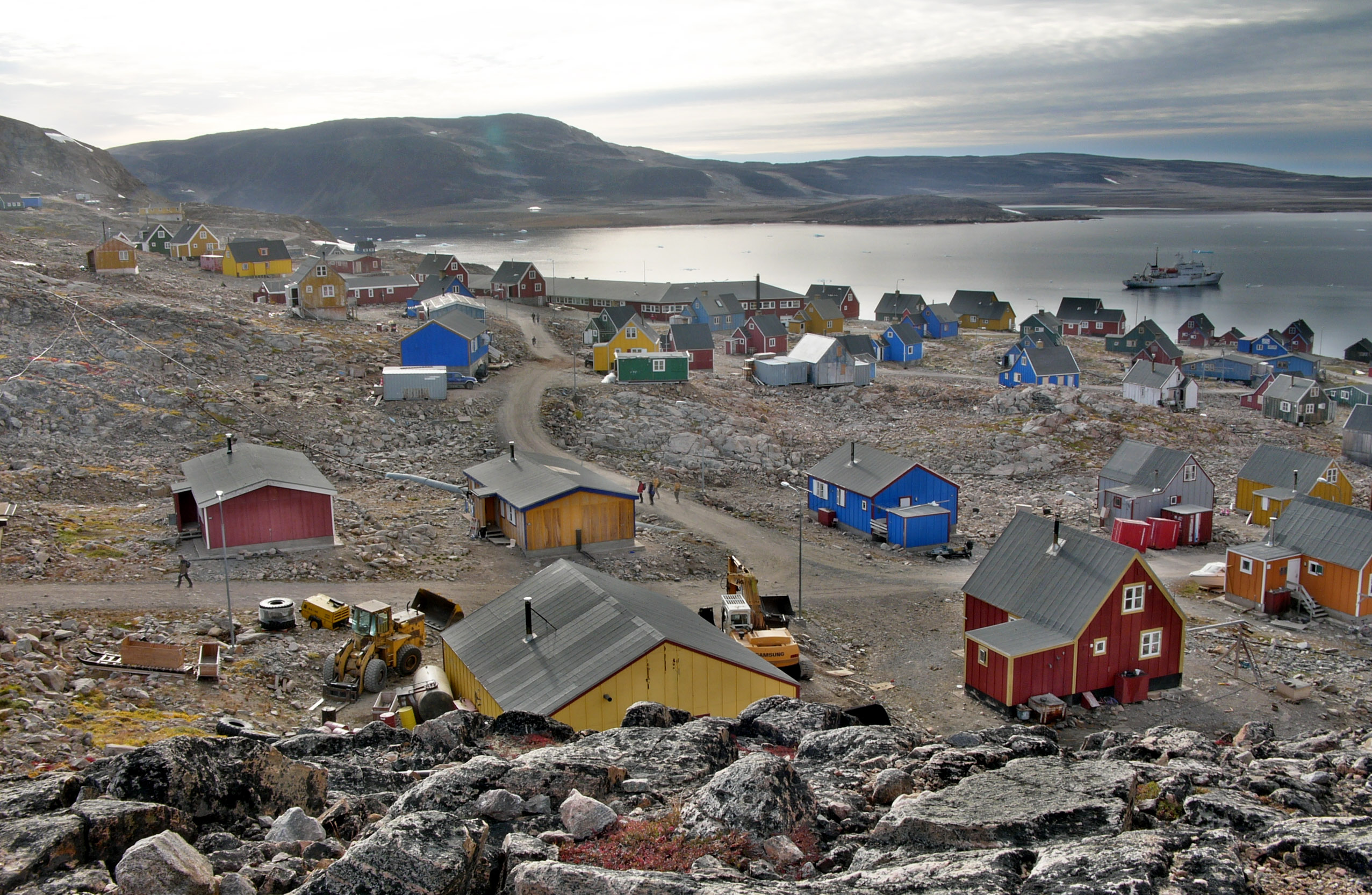
What a Remote Town in Greenland Looks Like [PIC]
Ittoqqortoormiit is a town in the Sermersooq municipality in eastern Greenland, near the mouth of the northern shore of the Kangertittivaq fjord. Population is 537. Ittoqqortoormiit is one of the most remote towns in Greenland. It is served by the Nerlerit Inaat Airport, reachable by helicopter or boat for a few months a year.
read more | digg story
read more | digg story
OMG! Reddit breaks Adsense TOS!!!!
Sites displaying Google ads may not include: *Pornography, adult, or mature content
read more | digg story
read more | digg story
Free Speech for Students – Unless they Get Good at It
Whether or not students can be punished for speech outside of school has become a controversial topic recently and the ruling, at least so far, is a little strange: it seems that student speech outside of school is protected, so long as it’s ineffective.
read more | digg story
read more | digg story
Sunday, February 1, 2009
Rubik's Cube inventor is back with Rubik's 360
The Rubik’s 360 is set to repeat the success of the maddening Cube, which became an overnight sensation almost three decades ago and remains the world’s fastest-selling toy. Now the reclusive Hungarian inventor hopes to recreate the buzz of Rubik’s Cube with his new game, featuring six balls trapped within three transparent plastic spheres.
read more | digg story
read more | digg story
Earth-hunter telescope prepared for launch
NASA unveiled a modest telescope on Friday with a sweeping mission — to discover if there are any Earth-type planets orbiting distant stars.
read more | digg story
read more | digg story
YouTube - President Obama Signs the Lilly Ledbetter Fair Pay
On January 29, 2009, with the new law's namesake Lilly Ledbetter there to witness, President Obama signed into law the Lilly Ledbetter Fair Pay Act -- legislation to fight pay discrimination and ensure fundamental fairness to American workers.
read more | digg story
read more | digg story
Police spend 20,000 euro on cardboard officers
Police forces have spent more than �20,000 on cardboard cut-outs of uniformed officers designed to confuse criminals.
read more | digg story
read more | digg story
Extinct ibex is resurrected by cloning
An extinct animal has been brought back to life for the first time after being cloned from frozen tissue.
read more | digg story
read more | digg story
The Associated Press: Analysis: Team Obama preoccupied with
You'd hardly know George W. Bush is spending his days relaxing down in Texas. It feels like he's still right here in Washington, given the current president's almost daily repudiation of his predecessor's policies.It's not that you hear Barack Obama uttering Bush's name, and aides are loathe to bring up Bush directly, except in private.
read more | digg story
read more | digg story
Saturday, January 31, 2009
Fiction Market Blog: An Obituary for Carl the Carpenter by C
“An Obituary for Carl the Carpenter” by Christopher Schmitz from The Abacot Journal is a plain spoke, fantastical, hilarious obituary set in Carltown, United Kingdom (a false setting). It is told in third person. We, the readers, learn that Carl was a leader in on-the-job safety but also loved to street surfing. He died in an accident. The truck he
read more | digg story
read more | digg story
Governments across Europe tremble as effects of global reces
France paralysed by a wave of strike action, the boulevards of Paris resembling a debris-strewn battlefield. The Hungarian currency sinks to its lowest level ever against the euro, as the unemployment figure rises. Greek farmers block the road into Bulgaria in protest at low prices for their produce. New figures from the biggest bank in the Baltic sho
read more | digg story
read more | digg story
Bruce Springsteen calls Wal-Mart deal a mistake
In an interview with The New York Times, Bruce Springsteen says he shouldn't have made a deal with Wal-Mart. This month, the store started exclusively selling a Springsteen greatest-hits CD.
read more | digg story
read more | digg story
cockeyed.com: Cash4Gold offers 1/3rd of gold's value
Another great experiment from cockeyed.com "Cash4Gold is nice enough to admit when they were trying to rip you off."
read more | digg story
read more | digg story
Thursday, January 29, 2009
Illinois Senate Votes to Oust Gov. Blagojevich
CHICAGO, Jan. 29 -- The Illinois Senate voted unanimously Thursday to remove Gov. Rod Blagojevich (D) from office for abuse of power, ending a weeks-long impeachment ordeal that ranged between drama and farce.
read more | digg story
read more | digg story
Sunday, January 25, 2009
FreightTrain Magazine Quarterly: Winter 2009 v04 i01
There is a story and a play in this issue.The first, "The Button Burial" by Christine Stoddard, is a wonderful story about a woman coming to grips with a small problem. The play, Origin of Consciousness by Robert Castle, is historically funny.
read more | digg story
read more | digg story
America’s Most Mysterious Places
From UFO hotspots on the West Coast to mystifying castles in Florida, weird and wonderful places await.
read more | digg story
read more | digg story
World's oldest living tree over 9,000 years old - Telegraph
The world’s oldest living tree has been found in Sweden, a tenacious spruce which took root just after the end of the last ice age.
read more | digg story
read more | digg story
Saturday, January 24, 2009
Monty Python put free videos online, sells 23,000% more DVDs
"For 3 years you YouTubers have been ripping us off, taking tens of thousands of our videos and putting them on YouTube. Now the tables are turned. It's time for us to take matters into our own hands"
read more | digg story
read more | digg story
Analysis: Abrupt end to 'war on terror'
President Obama yesterday eliminated the most controversial tools employed by his predecessor against terrorism suspects. With the stroke of his pen, he effectively declared an end to the "war on terror," as President George W. Bush had defined it.
read more | digg story
read more | digg story
Friday, January 23, 2009
The Obameter: Tracking Obama's Campaign Promises
PolitiFact has compiled about 500 promises that Barack Obama made during the campaign and is tracking their progress on our Obameter. We rate their status as No Action, In the Works or Stalled. Once we find action is completed, we rate them Promise Kept, Compromise or Promise Broken.
read more | digg story
read more | digg story
57 Free Image Gallery, Slideshow And Lightbox Solutions
Awesome tutorials or auto-generated slideshows to showcase your photos. And they're FREE btw..
read more | digg story
read more | digg story
8 Stupid Gun Mistakes Most Movies (and every Writer) Makes
I made a partial list below (I'm sure Duane Thomas can add to it) of dumb things I see in novels and comics and movies in the area of firearms. A few of these (for dramatic license) I make myself. But they're still dumb.
read more | digg story
read more | digg story
Why Nuclear Weapons Are (Still) Bad for Earth
In the 1980s, climate scientists in Russia & U.S. theorized that all-out nuclear war between the superpowers would result in a "nuclear winter," blackening the sky and sending temperatures plummeting below freezing, killing crops and eventually starving everybody. While there is no regional nuclear war, the climate effects are still sobering.
read more | digg story
read more | digg story
Obama wants to know: Why open source?
President Barack Obama is a smart guy. Where others zig, he zags. It's perhaps not surprising, then, that he's been asking around about the benefits of open source, according to Sun Chairman Scott McNealy, who has been asked by President Obama to author a white paper on the benefits the U.S. government can derive from open source.
read more | digg story
read more | digg story
A Secret in Plain View by Dane Cervine
“A Secret in Plain View” by Dane Cervine from Contrary is a plain spoken, realistic story set in the Midwest. It is told in first person. The man goes each year with his wife to family gatherings in the Midwest, but this year they are meeting the English side of the family. All the men are taken to a cousin’s “gentleman’s club.” The husbands enjoy
read more | digg story
read more | digg story
Sunday, January 11, 2009
Checklist by Dave Yakubik
Near the end of my high school days, just before I left Guernsey County for good, my friend Clint recommended we go see the Big Muskie before they dismantled it. He didn't know what it was, but his brother's friend had claimed it was pretty sweet. When I got home, my mother asked me if I'd made plans for the weekend. Although I could think of nothi
read more | digg story
read more | digg story
Saturday, January 3, 2009
17 Molecules That Changed the World
All molecules are not created equal. Some have saved billions of lives, wreaked environmental havoc or made the world a more colourful place. Here's our selection of those that have changed the course of human history.
read more | digg story
read more | digg story
Superscraper nears date with destiny
For over 100 years, where there's been an economic boom and confidence, there have been skyscrapers."They're acts of optimism, they're dreams rendered in steel and concrete," says William Baker, the chief structural engineer behind what will soon be unveiled as the tallest building in the world.
read more | digg story
read more | digg story
Mars Rovers are Celebrating Five Years on the Red Planet!
The first robot, named Spirit, landed on 3 January, 2004, followed by its twin, Opportunity, 21 days later.
read more | digg story
read more | digg story
How To Run Linux From A USB Drive
Take Ubuntu or Fedora wherever you go. Nothing can beat having a great Linux distro installed on a super-fast hard drive, with all your favourite apps configured just how you like them and all your files at your fingertips.
read more | digg story
read more | digg story
How Crabs Find Their Way Home
How animals keep their bearings on hunting trips is somewhat of a mystery. What is more puzzling is how animals measure distances. A new study has found the first direct evidence that fiddler crabs monitor their travels by tracking their strides.
read more | digg story
read more | digg story
Japan auto sales plunge as young lose interest - Yahoo! Fina
To get around the city, Yutaka Makino hops on his skateboard or rides commuter trains. Does he dream of the day when he has his own car? Not a chance.
read more | digg story
read more | digg story
Subscribe to:
Posts (Atom)